What Is Cut Size? A Guide for Food Processors Buyers (2026)
As an Amazon Associate we earn from qualifying purchases. Links on this page are affiliate links.
Understanding Cut Size in Food Processors
Cut size refers to the diameter of the slices or shreds a food processor produces. This specification is critical because it determines the final texture and cooking time of your ingredients. When you buy a food processor, you are often choosing between different blade configurations that yield distinct results.
Manufacturers label this spec in fractions of an inch. You will commonly see values like 1/4 inch, 3/8 inch, 1/2 inch, and 3/16 inch. These numbers represent the width of each individual slice or shred. A smaller number means a thinner cut, while a larger number indicates a thicker piece.
The 3/16 inch setting produces very thin slices. This is ideal for dishes where you want the ingredient to blend seamlessly, such as in gratins or quick-cooking stir-fries. The 1/4 inch option offers a standard thickness. It works well for most everyday tasks, including making coleslaw or slicing cucumbers for salads.
The 3/8 inch cut is slightly thicker. This size is often preferred for roasting vegetables, as it helps them retain some structure and moisture during cooking. The 1/2 inch setting creates the thickest slices. You should use this for hearty vegetables like potatoes or carrots when you want distinct, substantial pieces that hold their shape.
Why does this matter to you? Consistent cut size ensures even cooking. If your slices vary in thickness, some pieces may become mushy while others remain raw. By understanding cut size explained, you can select the right blade for your specific recipe needs. Check the product specifications before purchasing to see which sizes are included. This simple detail can significantly improve your food preparation results.
Cut Size Options Compared
1/4 Inch
A 1/4-inch cut produces thin, uniform slices. This size is ideal for tomatoes, onions, or potatoes where consistency matters. The Winco 1/4" Commercial Tomato Slicer uses this specification. It is a manual tool designed for chefs who need reliable results without electric complexity. You get even cooking and a professional presentation. However, this size requires more prep time than larger cuts. It is not suitable for dishes needing thick chunks. Choose this if your recipes demand precision. The trade-off is the need for a matching slicer unit. You must handle the slicing process manually or with a dedicated device. This option suits high-volume commercial kitchens where speed and uniformity are critical.
3/8 Inch
A 3/8-inch cut creates medium-sized dice or slices. This is a common standard for dicing grids in food processors. The Waring 3/8-Inch Dicing Grid Punch Tool helps maintain this size. It is a cleaning aid for the WFP16SCD processor. It keeps the grid clear for consistent 3/8-inch pieces. This size works well for salads, soups, and stir-fries. You get a balance between cooking speed and texture. It is larger than 1/4-inch but smaller than 1/2-inch. The trade-off is that you need a specific dicing grid. Not all processors include this attachment. You must ensure your machine supports this cut size. This option is best for versatile home or commercial use where you need reliable, medium-sized pieces for various dishes.
1/2 Inch
A 1/2-inch cut yields thick slices or large cubes. This size is less common in the provided data but represents a larger cut option. You would use this for hearty vegetables like carrots or potatoes. The cooking time is longer than with smaller cuts. You get a firmer texture in the final dish. This size is suitable for roasting or grilling. It is not ideal for quick sautés. The trade-off is the increased cooking duration. You must adjust your recipe times accordingly. This option suits dishes where you want distinct, substantial pieces. It requires a food processor with a wide slicing disc or a large dicing grid. You need to verify that your machine can handle this thickness. This is a practical choice for chunky stews or gratins.
3/16 Inch
A 3/16-inch cut is a fine, precise slice. This size is smaller than 1/4-inch. The New Star Foodservice Tomato Slicer Pushing Block supports this specification. It is a replacement part for commercial slicing units. It ensures precise 3/16-inch cuts for tomatoes. This size is best for very thin slices where uniformity is key. You get a delicate texture that melts quickly in cooking. It is ideal for garnishes or layered dishes. The trade-off is that it is a specialized cut. You need a specific slicer that supports this fine thickness. Not all manual slicers offer this precision. You must match the pushing block to your slicer model. This option suits professional kitchens requiring exact, thin slices for presentation or specific culinary techniques.
Is Cut Size Worth It
Who needs it
You need precise cut sizes if your recipes demand specific textures or even cooking times. A 1/4-inch slice works well for tomatoes or onions where thin, uniform pieces are essential. If you often make dishes like ratatouille or potato gratins, consistency matters. The 3/16-inch option offers an even finer cut for delicate ingredients that might break apart with larger blades. Meanwhile, the 3/8-inch and 1/2-inch cuts provide heartier slices suitable for roasting or baking. When you require uniformity to ensure every bite tastes the same, these specific measurements help you achieve that goal. You should prioritize these specs if you cook frequently and value presentation alongside flavor. Precise cutting reduces guesswork in the kitchen and leads to better results.
Who can skip it
You can ignore exact cut size if you mostly chop ingredients for soups, stews, or smoothies. In these cases, the final texture is less critical because the food gets cooked down or blended anyway. If you use your machine for rough chopping vegetables for salsa or making dips, the slight variation in slice thickness will not affect the outcome. You might also skip this focus if you prefer a versatile machine that handles multiple tasks beyond slicing. Prioritize motor power, bowl capacity, or blade versatility instead. These features offer more broad utility for general home cooking. Exact measurements are less important when you are preparing quick meals or batch-cooking large quantities where uniformity is not the primary concern. Focus on ease of cleaning and durability for everyday use.
Cut Size Glossary
Cut Size
The diameter of slices or shreds produced by the machine. It directly affects cooking time and final texture, so you should match it to your recipe needs.
Slice Thickness
The measurement of individual slice depth. A 1/4-inch thickness is common for onions and tomatoes, providing uniform pieces that cook evenly and look consistent in salads.
Shred Size
The length and width of shredded pieces. This matters for cheeses or carrots, where finer shreds melt faster and coarser shreds provide more texture in baked dishes.
Uniformity
How consistent the size of each piece is. Uniform cuts ensure even cooking, which prevents some pieces from burning while others remain undercooked in the same batch.
Dicing
Cutting food into small, cube-shaped pieces. This size is ideal for salsas, chutneys, or stir-fries where you need bite-sized portions that blend well with other ingredients.
Julienne
Cutting food into thin, matchstick-like strips. This specific cut size is perfect for slaws, garnishes, or stir-fries, offering a distinct crunch and visual appeal in your final dish.
Coarse Grate
A setting that produces larger, rougher pieces. Use this for vegetables like zucchini or potatoes when you want a chunkier texture that holds its shape during cooking.
Quick picks
| # | Product | Best for | Price |
|---|---|---|---|
| 1 | Winco 1/4" Commercial Tomato Slicer | Uniform 1/4-inch tomato slices | Check price of Winco 1/4" Commercial Tomato Slicer on Amazon |
| 2 | Waring 3/8-Inch Dicing Grid Punch Tool | Cleaning the 3/8-inch dicing grid | Check price of Waring 3/8-Inch Dicing Grid Punch Tool on Amazon |
| 3 | New Star Foodservice Tomato Slicer Pushing Block | Commercial tomato slicing with precise 3/16-inch cuts | Check price of New Star Foodservice Tomato Slicer Pushing Block on Amazon |
Our 3 picks

Winco 1/4" Commercial Tomato Slicer
Best for: Uniform 1/4-inch tomato slices
- Cut Size
- 1/4 Inch (what this guide is about)
- Included Blades
- Serrated blade
- Recommended Food
- Tomatoes
- Color
- Silver
- Intended Use
- Commercial
- Features
- Non-Slip
View on Amazon: Winco 1/4" Commercial Tomato Slicer Affiliate link
This Winco manual slicer cuts tomatoes into uniform 1/4-inch slices. It uses a serrated blade to slice without crushing the fruit. The device includes an HDPE board and stands on four non-skid feet for stability. Its easy-grip handle provides leverage for one-push operation. You should use it for high-volume commercial tasks like salad bars or catering.
Pros
- Produces consistent 1/4-inch slices
- Serrated blade prevents crushing
- Includes HDPE board
- Non-skid feet for stability
Cons
- Manual operation requires physical effort
- Dedicated only to tomatoes
- No electric motor
Good fit if
- You need precise 1/4-inch tomato slices
- You work in a commercial kitchen
- You prioritize uniformity over speed
Skip if
- You require electric automation
- You need to slice other vegetables
- You want 3/8-inch cuts
Verdict: Winco 1/4 Inch Commercial Tomato Slicer is a sturdy manual tool for chefs who need consistent 1/4-inch tomato slices without electric complexity.
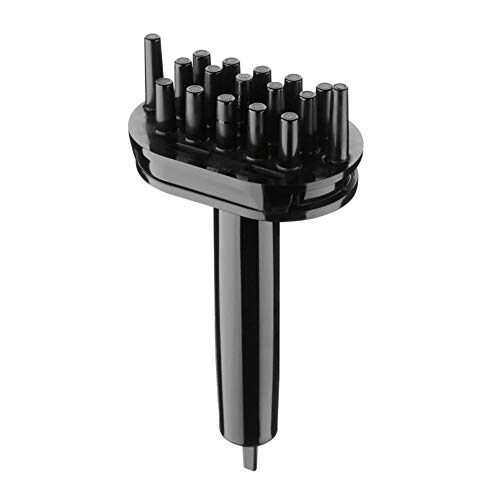
Waring 3/8-Inch Dicing Grid Punch Tool
Best for: Cleaning the 3/8-inch dicing grid
- Cut Size
- 3/8 Inch (what this guide is about)
- Function
- Dice
- Color
- Black
- Dimensions
- 5.5 × 1.5 × 2.5 inches
- Weight
- 2 pounds
View on Amazon: Waring 3/8-Inch Dicing Grid Punch Tool Affiliate link
This is a cleaning punch tool for the Waring WFP16SCD food processor. It removes food stuck in the 3/8-inch (10mm) dicing grid. The tool is black and dishwasher safe. It measures 1.5 inches wide, 2.5 inches high, and 5.5 inches long. It weighs 2 pounds. You need this if you use the 3/8-inch cut size accessory. It helps keep your dicing grid clear.
Pros
- Designed for 3/8-inch (10mm) dicing grid
- Compatible with WFP16SCD food processor
- Dishwasher safe for easy cleaning
Cons
- Only fits the 3/8-inch cut size
- Requires the WFP16SCD food processor
- Does not slice or dice food
Good fit if
- You own a WFP16SCD food processor
- You use the 3/8-inch dicing grid
- You need to clean the dicing grid
Skip if
- You do not have a WFP16SCD
- You use a different cut size
- You want a slicing tool
Verdict: Waring 3/8" Dicing Punch Tool is a specialized cleaning aid for WFP16SCD owners. It keeps the 3/8-inch grid clear. It is not a food processor.

New Star Foodservice Tomato Slicer Pushing Block
Best for: Commercial tomato slicing with precise 3/16-inch cuts
- Cut Size
- 3/16 Inch (what this guide is about)
- Recommended Food
- Tomatoes
- Color
- Silver
- Intended Use
- Commercial
- Dimensions
- 5 × 4 × 2 inches
- Weight
- 8 ounces
View on Amazon: New Star Foodservice Tomato Slicer Pushing Block Affiliate link
This is a replacement pushing block for the New Star Commercial Tomato Slicer. It produces a precise 3/16-inch cut size for tomatoes. The block measures 5 inches long, 4 inches wide, and 2 inches high. It weighs 8 ounces and is made of silver metal. The part is heavy duty and dishwasher safe. You should use this block to maintain consistent slicing results in a commercial kitchen setting.
Pros
- Produces a consistent 3/16-inch cut size
- Heavy duty construction for commercial use
- Dishwasher safe for easy cleaning
- Easy to assemble
Cons
- Smaller 3/16-inch cut size limits versatility for larger vegetables
- Designed specifically for tomatoes rather than general food prep
- Sold as a replacement part rather than a complete slicer unit
Good fit if
- You need a replacement pushing block for your existing New Star slicer
- You require precise 3/16-inch slices for tomatoes
- You work in a commercial kitchen where dishwasher safety is required
Skip if
- You are looking for a complete food processor or slicer
- You need larger cut sizes like 1/4 or 1/2 inch
- You want a manual tool for home use only
Verdict: New Star Foodservice 3/16-Inch Pushing Block is a specialized replacement part for commercial tomato slicing. It fits users who need precise 3/16-inch cuts and have the matching slicer unit.
Specifications side by side
| Spec | Winco 1/4" Commercial Tomato Slicer | Waring 3/8-Inch Dicing Grid Punch Tool | New Star Foodservice Tomato Slicer Pushing Block |
|---|---|---|---|
| Included Blades | Serrated blade | not stated | not stated |
| Function | not stated | Dice | not stated |
| Recommended Food | Tomatoes | not stated | Tomatoes |
| Cut Size | 1/4 Inch | 3/8 Inch | 3/16 Inch |
| Color | Silver | Black | Silver |
| Intended Use | Commercial | not stated | Commercial |
| Use | Commercial Use | not stated | Commercial Use |
| Features | Non-Slip | not stated | not stated |
| Dimensions | not stated | 5.5 × 1.5 × 2.5 inches | 5 × 4 × 2 inches |
| Weight | not stated | 2 pounds | 8 ounces |
| Size | 1/4" | 3/8" 10mm | 3/16-Inch Pushing Block |
| Model | TTS-250S | WFP16S20 | 39948 |
Frequently asked questions
Does cut size affect cooking time?
Yes, smaller pieces cook faster. A 3/16-inch slice heats through more quickly than a 1/4-inch slice. Uniformity ensures even cooking. If you need consistent results, matching the cut size to your recipe is essential for proper texture and timing.
What is the best cut size for tomatoes?
A 1/4-inch cut is ideal for tomatoes. The Winco 1/4" Commercial Tomato Slicer delivers uniform slices for this fruit. This size works well for salads or sandwiches. It provides the right balance between thickness and ease of eating.
Can I use a dicing punch for slicing?
No, a dicing punch is not a slicer. The Waring 3/8" Dicing Punch Tool cleans grids. It helps maintain the 3/8-inch cut size in a processor. It does not cut food itself. You need a separate blade for slicing.
What does a 3/8-inch cut look like?
A 3/8-inch cut creates medium-diced cubes. This size is common for dicing grids. The Waring tool helps keep these grids clean. It ensures the 3/8-inch specification remains accurate. This size is useful for stews or stir-fries.
Why is a pushing block important?
A pushing block ensures safety and precision. The New Star Foodservice block fits 3/16-inch slicers. It helps push tomatoes through safely. This accessory maintains the specific 3/16-inch cut size. It is essential for commercial tomato slicing operations.
Is cut size measured in millimeters?
Yes, cut size can be in millimeters. The Waring tool lists 3/8-inch as 10mm. This conversion helps international buyers. You should check the specification sheet. Both imperial and metric units indicate the same physical dimension for your ingredients.